
What Is Simultaneous Interpretation and How Does It Work at Professional Events?

A Clear Guide for Event Organizers, Businesses, and Institutions That Need Accurate, Professional Multilingual Communication
At conferences, audits, training sessions, or international events, communication cannot rely on improvisation. When speakers and attendees do not share the same language, simultaneous interpretation becomes an essential service for ensuring clear understanding, seamless communication, and a professional experience.
Although many people have heard the term, few truly understand how simultaneous interpretation works, when it is used, and what sets it apart from other interpreting methods. This guide is designed for event organizers, businesses, and institutions that want a clear understanding of the service and the confidence to make informed decisions from the very beginning.
¿What Is Simultaneous Interpretation?
Simultaneous interpretation is a mode of oral interpretation in which the interpreter conveys the speaker’s message into another language almost at the same time it is delivered, with only a brief delay of a few seconds.
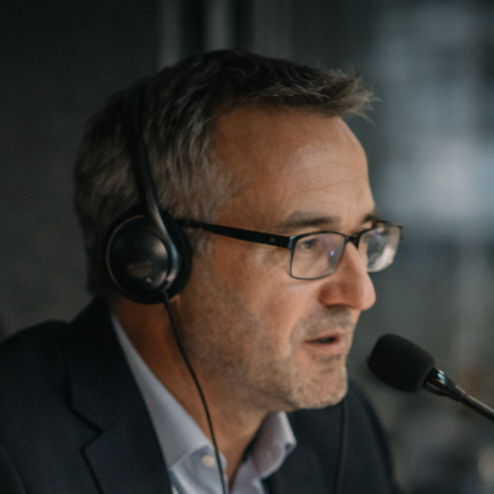
The audience listens to the interpretation through headsets while the interpreter works from an interpretation booth or a specially equipped technical workspace. This allows the event to proceed without interruptions, ensuring that all participants receive the information smoothly and in real time.
Simultaneous interpretation is the preferred solution for:
International conferences
Corporate conferences and business meetings
Institutional and government events
Audits and technical training sessions
Academic and cultural forums
How Does Simultaneous Interpretation Work at a Live Event?
Although it may appear simple from the audience’s perspective, simultaneous interpretation requires careful coordination, specialized equipment, and thorough preparation. In general, the process works as follows:
The speaker delivers the presentation in the original language.
The interpreter listens through professional-grade headphones.
The interpreter processes the message in real time, taking into account its content, intent, and context.
The interpreter conveys the message in the target language while preserving its original meaning.
The audience listens to the interpretation through wireless receivers and headsets.
All of this happens within seconds and demands exceptional concentration, advanced language proficiency, and extensive professional experience.
The Role of a Professional Interpreter
A professional interpreter does far more than translate words—they convey ideas, nuances, and cultural context. Their role involves:
Listening to and analyzing the speaker’s message in real time.
Anticipating linguistic structures.
Maintaining consistent terminology throughout the event.
Adapting to the speaker’s pace and style.
Delivering the message with clarity, accuracy, and neutrality.
Because of the intense cognitive demands of simultaneous interpretation, interpreters always work in teams of two, alternating every 20 to 30 minutes. This is not a luxury—it is a professional standard that ensures consistent quality, accuracy, and reliability throughout the event.

What Are Interpretation Booths and Why Are They Important?
Interpretation booths are sound-insulated workspaces designed to allow interpreters to perform their job without external distractions or interference. They serve several essential purposes:
Isolating interpreters from background noise.
Protecting the clarity of the interpreter’s voice.
Preventing the interpreted audio from interfering with the event’s main sound system.
Providing an environment that supports sustained concentration.
Interpretation booths are available in both permanent and certified portable configurations. The most suitable option depends on the type of event, the venue, and the number of languages required.
What Types of Events Use Simultaneous Interpretation?
Simultaneous interpretation is the ideal solution when:
The event brings together a multilingual audience.
The program needs to flow without interruptions.
The schedule is tight and time efficiency is essential.
The goal is to provide a professional and inclusive experience for all participants.
It is especially common at:
Medical and scientific conferences
International corporate events
Audits and compliance processes
Educational and cultural institutions
Presentations before international organizations
Benefits Compared with Other Interpreting Methods
Compared with consecutive interpretation, simultaneous interpretation offers several key advantages:
A smoother event flow
Significant time savings
A better experience for attendees
A more professional and international image
Immediate access to information in the listener’s preferred language
For these reasons, simultaneous interpretation is the preferred choice for medium-sized and large-scale events.
Common Misconceptions About Simultaneous Interpretation
When planning a multilingual event, organizers often make mistakes such as:
Assuming that one interpreter is enough.
Failing to arrange the appropriate interpretation booths or equipment.
Confusing interpretation with written translation.
Not providing presentation materials in advance.
Underestimating the technical logistics involved.
Working with a specialized interpretation agency helps prevent these issues from the planning stage, ensuring a smooth and successful event.
Simultaneous interpretation is more than just a language service—it is a strategic communication tool. When delivered professionally, it enables ideas, agreements, and knowledge to cross language barriers seamlessly, without friction or misunderstandings.
Understanding how simultaneous interpretation works is the first step toward organizing successful, professional, and well-coordinated international events.

If you're looking for professional simultaneous interpretation for your event, Carax Lingua provides certified interpreters, state-of-the-art interpretation equipment, and expert technical support to help you deliver clear communication without language barriers.


Comments